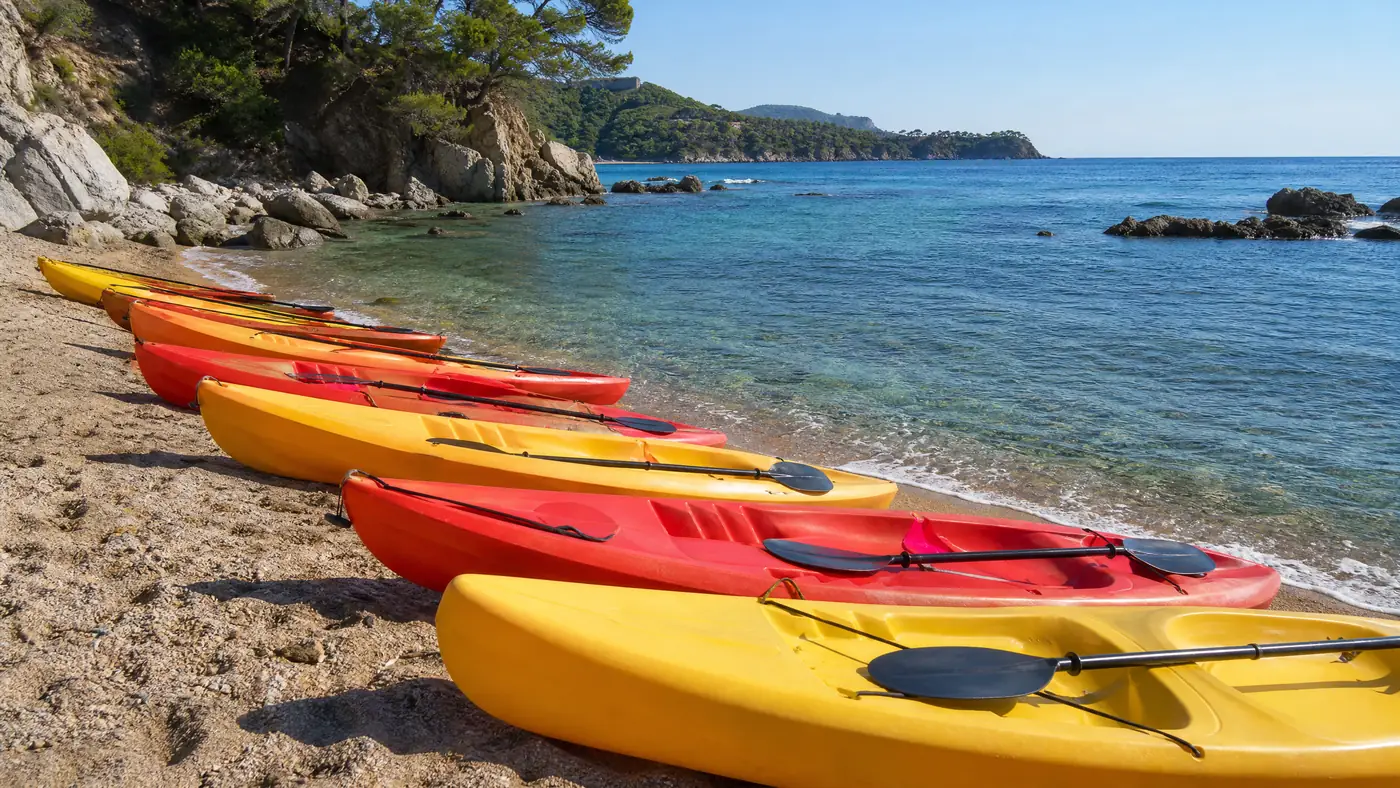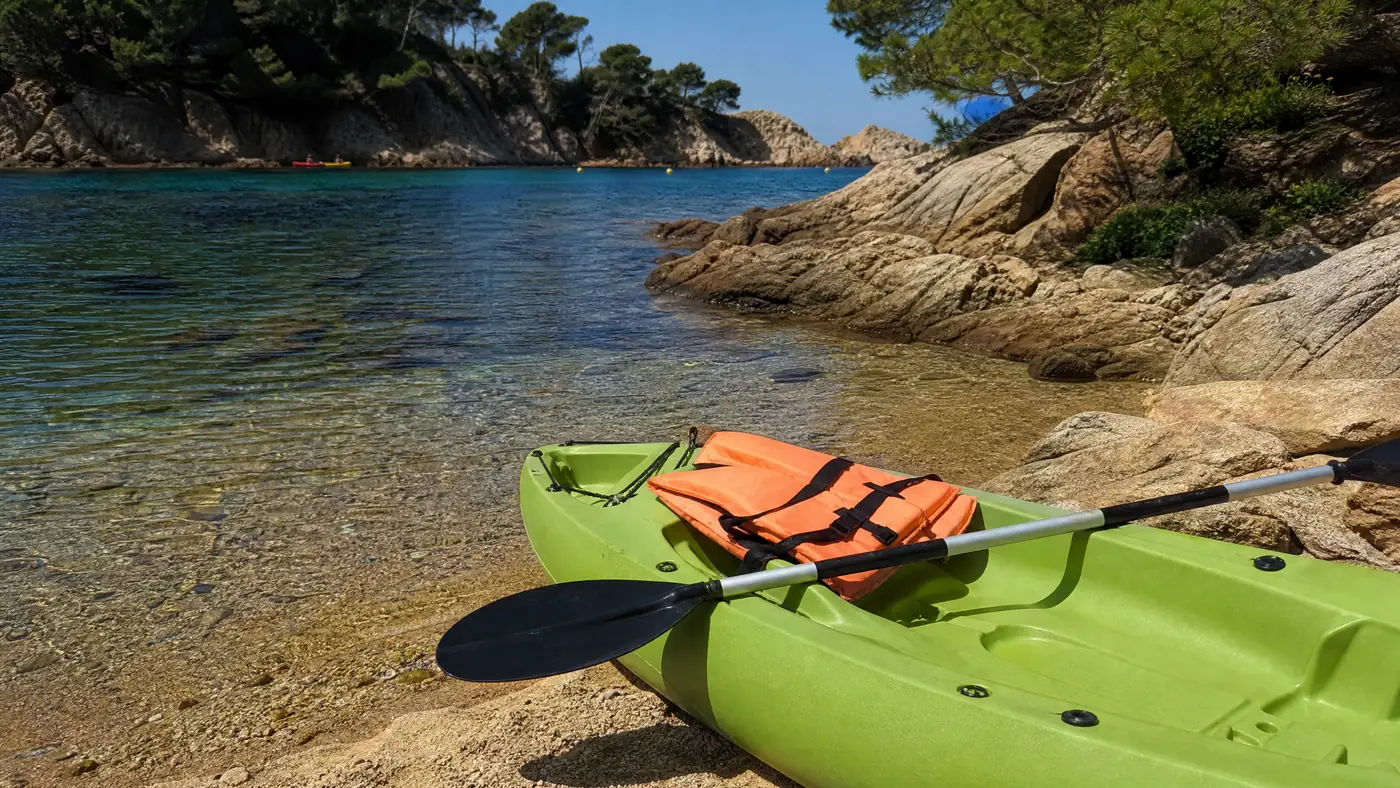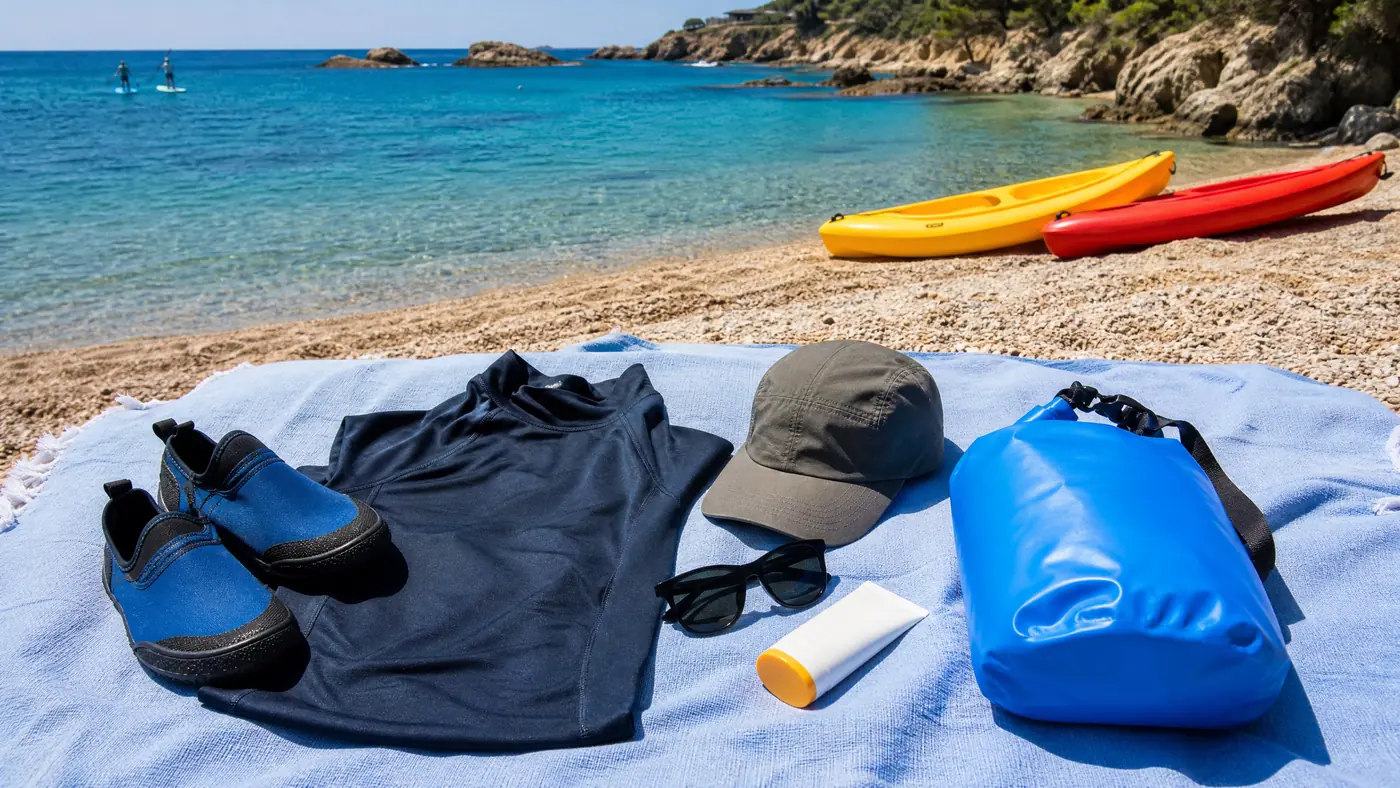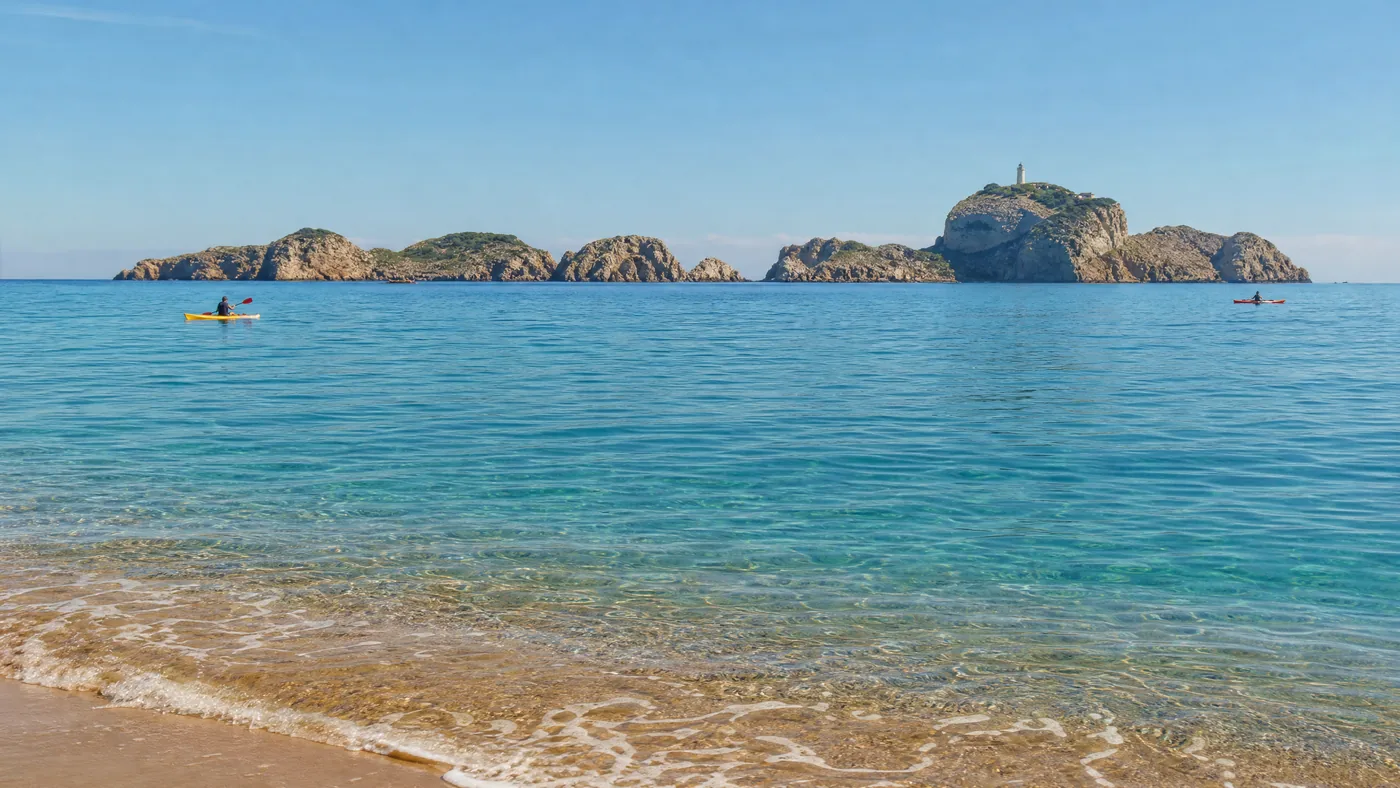
Booking choice: The Tossa de Mar kayak tour, from $39 per person. Check dates Tour details
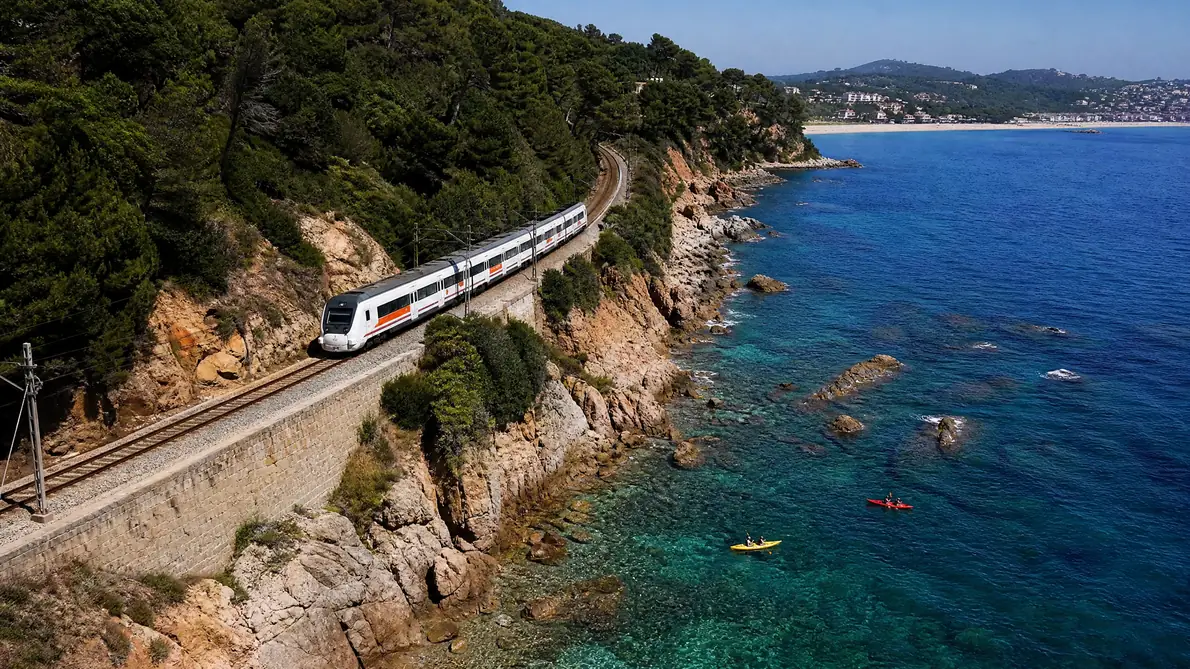
The journalist Ferran Agulló coined the name in the newspaper La Veu de Catalunya in September 1908: Costa Brava, the rugged coast. Over a century of holidays later, the name still fits. Granite and pines run down to the sea, and between the headlands sit coves, some with a village, some with nothing but a path.
This guide goes town by town and beach by beach, then covers the best months, the food and how the Costa Brava compares with the Costa Dorada. The last section matches each town to the nearest kayak tour on this site, because the best view of most of these coves is from the water.
The quick answer
Tossa de Mar and Calella de Palafrugell are the two towns most often called the prettiest: Tossa for its walled medieval Vila Vella, Calella for its fishing-village look. For coves, head to Palafrugell and Begur. June and September are our pick for a visit. The Tossa de Mar kayak tour, the highest rated on this site, paddles the rock formations and coves below the old town, from $39.
What is the prettiest town on the Costa Brava?
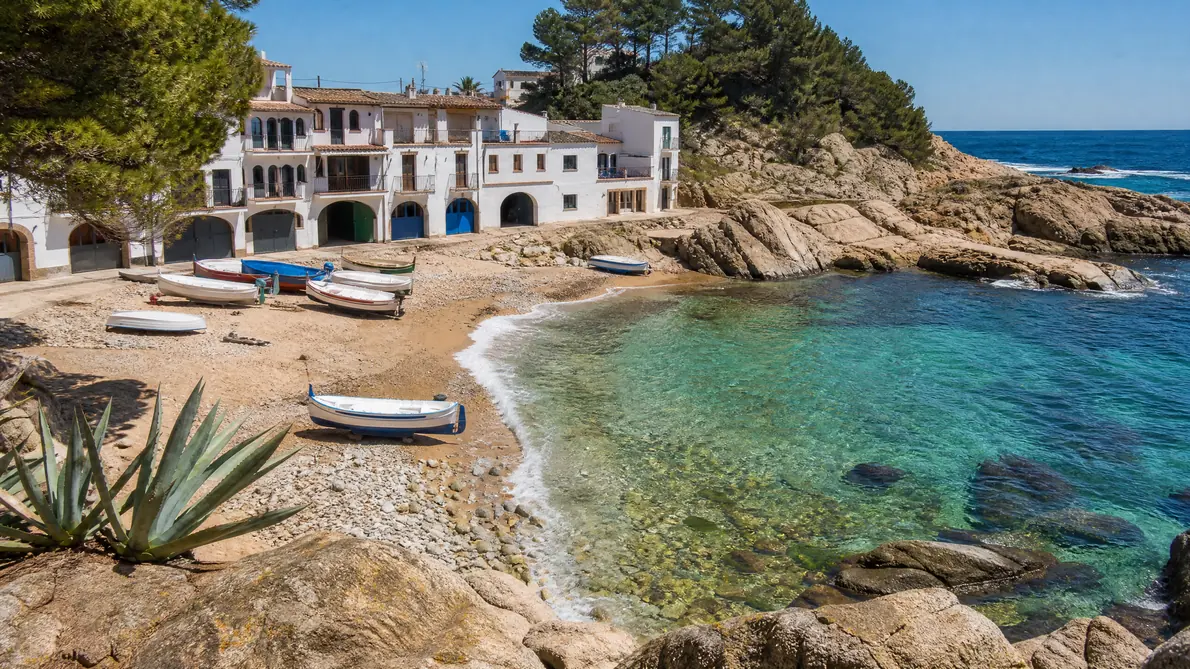
It's your call, but two names come up again and again: Tossa de Mar, with the only fortified medieval town still standing on the Catalan coast, and Calella de Palafrugell, which keeps the look of a fishing village from before mass tourism.
Tossa de Mar. The Vila Vella sits on Mount Guardí above the beach. Its walls date from the end of the 14th century and keep the whole original circuit, with four turrets and three round towers, and a lighthouse stands where the abbot's castle once was. It was declared a national historic monument in 1931. Below it, Platja Gran runs 380 meters along the town (Wikipedia).
Calella de Palafrugell. The Palafrugell tourism office describes narrow streets, steep tiled roofs and traditional two-floor fishermen's houses, and Calella holds the Catalan Tourism Agency's "Poble amb encant" seal for places of special charm. Its old quarter, Port Bo, keeps the white arched vaults where nets were once sewn, now restaurants facing the boats (Wikipedia).
A third name for the list is Cadaqués, further north, covered below.
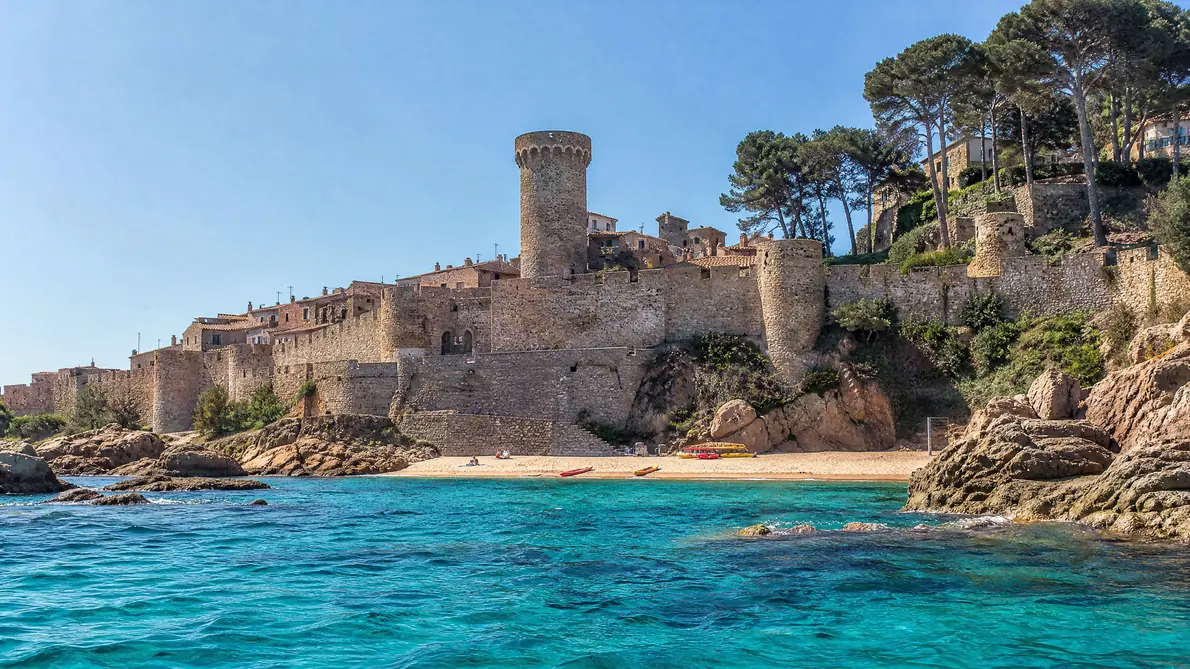
Paddle below Tossa's walls into rock passages and coves, with a guided snorkel stop, about 2 hours on the water.
Check dates for the Tossa de Mar kayak tourWhich part of the Costa Brava is best?
It depends on the trip. The south (Blanes, Lloret, Tossa) is closest to Barcelona and busiest. The middle (Sant Feliu de Guíxols to Begur and L'Estartit) has most of the coves and every kayak tour on this site. The north (L'Escala to Cadaqués and Cap de Creus) is wilder and farther.
The Costa Brava is usually taken to run from Blanes, 60 km north-east of Barcelona, to the French border, which makes it the coast of the province of Girona. Wikipedia splits it into three counties:
- The south (La Selva): Blanes, Lloret de Mar, the largest resort, with a population of over 200,000 at its summer peak, and Tossa de Mar.
- The middle (Baix Empordà): Sant Feliu de Guíxols, S'Agaró, Platja d'Aro, Palamós, Calella de Palafrugell, Llafranc, Tamariu, Begur, Pals and L'Estartit, where the Montgrí massif and the Medes Islands close the stretch.
- The north (Alt Empordà): L'Escala and the Greek ruins of Empúries, founded around 575 BC, the Gulf of Roses, Cadaqués and Cap de Creus.
Our view: for a first trip, base yourself in the middle. You get the coves, the camins de ronda and the kayak tours within a short drive, and the south and north are both reachable for a day.
What are the most beautiful beaches and coves on the Costa Brava?
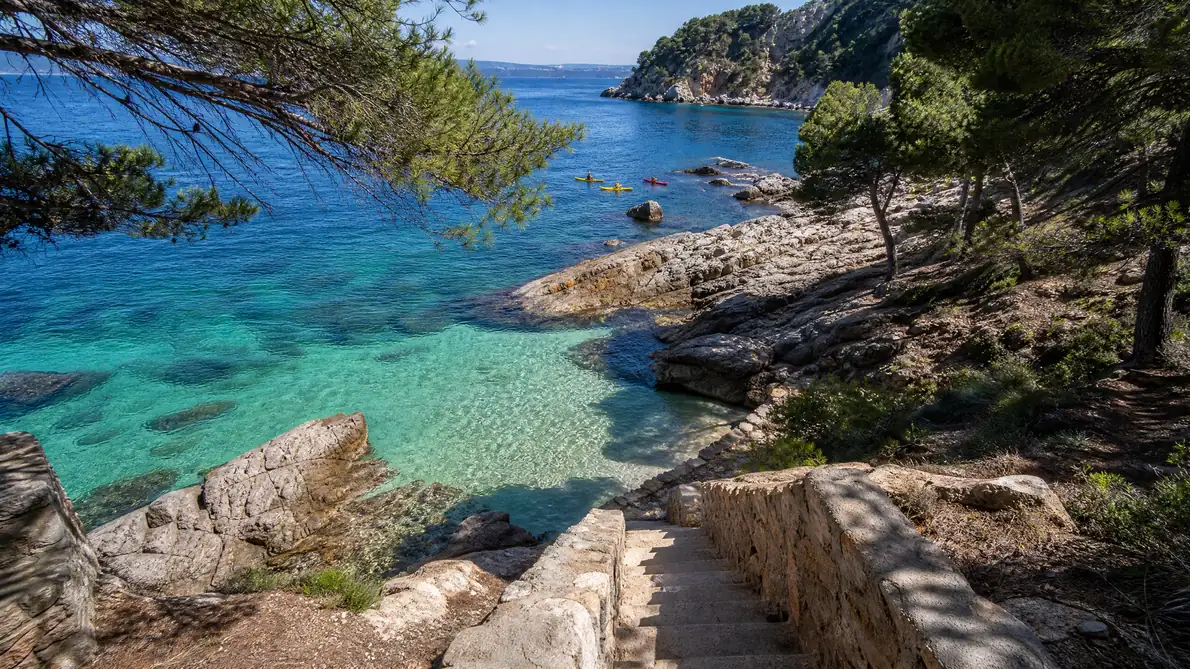
The coves of Palafrugell and Begur are the classic answer: Calella's string of small beaches on the Camí de Ronda, Llafranc's sandy bay, Tamariu, and Begur's Aiguablava, Sa Tuna and Aiguafreda.
- Calella de Palafrugell: a chain of coves, from Platja del Canadell to Platja del Golfet, linked by the Camí de Ronda along the cliffs and through tunnels (Wikipedia).
- Llafranc: a fine sandy bay with an esplanade to the port, 1 km north of Calella, and the best views on the Palafrugell coast from Cap de Sant Sebastià, with its lighthouse, watchtower and hermitage, per the Palafrugell tourism office.
- Tamariu: a coarse-sand beach set among rocks and greenery. The cove of Aigua Xelida, beyond it, is reached by sea, "in a canoe, boat or swimming", says the same office, since the coastal path does not go there.
- Begur: more than 20 km of coastline, from the fine sand of Sa Riera, good for families, to small coves with clear water such as Sa Tuna and Aiguafreda (Visit Begur).
- S'Agaró: Sant Pol and Sa Conca beaches, joined by the Camí de Ronda.
Begur's tourism office gives four tips that fit every cove: wear comfortable shoes for the remote ones, go early for parking and a quiet spot, bring water and sunscreen, and take your rubbish with you. In summer, usually June to September, Begur runs a beach bus linking Sa Riera, Sa Tuna and Aiguablava with the town center.
Begur, Cadaqués, S'Agaró and L'Estartit: what is each one like?
Begur is a hilltop town with a medieval castle above eight coves. Cadaqués is the white village of the Cap de Creus peninsula, tied to Dalí. S'Agaró is a 20th-century garden village on the cliffs, and L'Estartit is the beach town facing the Medes Islands.
- Begur: the castle tops the town, and around it stand the 16th-century defense towers built against pirates and the "Indian houses", colonial-style homes of locals who made a fortune in the Americas in the 19th century (Visit Begur). Its camins de ronda were once used to reach coves after shipwrecks, to watch for pirates and, after the war, by smugglers.
- Cadaqués: on a bay of the Cap de Creus peninsula, about a 2.25-hour drive from Barcelona. Dalí kept a home in Port Lligat next door, and Picasso, Miró and Duchamp spent time here (Wikipedia). Cap de Creus itself is the easternmost point of mainland Spain.
- S'Agaró: Josep Ensesa i Pujades bought the land in 1916, and his son built the first house to a design by the architect Rafael Masó. The Camí de Ronda was rebuilt with the development and runs along Sant Pol beach to Sant Feliu de Guíxols (Wikipedia).
- L'Estartit: part of Torroella de Montgrí, with a long beach under the Montgrí massif and the Medes Islands a mile offshore, per its tourist office.
Two of these have a kayak tour on the doorstep: the sea caves tour from S'Agaró and the Medes Islands kayak tour.
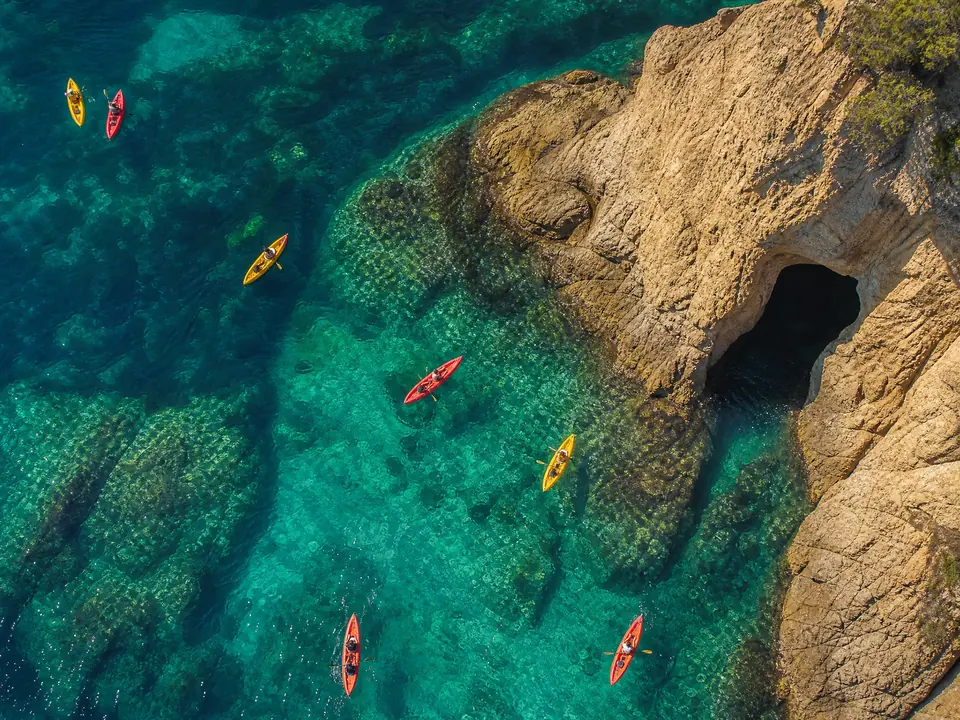
The most booked kayak tour on the Costa Brava: from Sant Pol beach into the sea caves of S'Agaró, groups of 14 at most.
Explore the sea caves tour from S'Agaró Tour detailsWhat is the best month to visit the Costa Brava?
June and September are our pick: warm sea, long days and fewer people than July and August. For swimming and kayaking, the sea is at its warmest late in summer.
What the official climate page for Begur says about the Baix Empordà:
- Summer: relatively hot, with August averaging 24°C. Only July and August count as arid.
- Autumn: the rainiest season, with a clear peak in rainfall.
- Winds: the Tramuntana from the north, strong and mostly in winter; the Garbí in summer; the Llevant in spring and autumn.
The sea has been running warm. Catalan News reported record sea temperatures off Catalonia in June and July 2025, about 2°C above the historical average, citing the L'Estartit station. Our sea temperature post has the month-by-month picture, and the autumn kayak notes cover paddling after the summer.
Whatever the month, wind decides each morning on the water. Every kayak tour here cancels free up to 24 hours before.
What food is the Costa Brava known for?
Seafood first: Palamós prawns, L'Escala anchovies, Cap de Creus lobster, suquet de peix and rice dishes such as arròs a la cassola, which mixes meat and fish, per the Costa Brava Girona Tourism Board.
The tourism board's list, with a few local extras:
- Palamós prawns: the board calls them "the only crustacean in the Mediterranean to have its own certified quality seal".
- Suquet de peix: "a thick soup of fresh fish and shellfish".
- Sea and mountain: arròs a la cassola, with meat and fish in one pan, and the Empordà's arròs fosc, where caramelized onion is the key.
- Sea urchins: Palafrugell's Garoinada runs from January to March, in the sea urchin season.
- Es Niu: a very old Palafrugell dish, first made without meat for Lent, served in an autumn campaign by local restaurants. Check visitpalafrugell.cat for this year's dates.
Inland, Spain.info notes that the restaurants around Girona have collected several Michelin stars. After a morning of paddling, a long lunch over a pan of rice by the beach is the local way to finish.
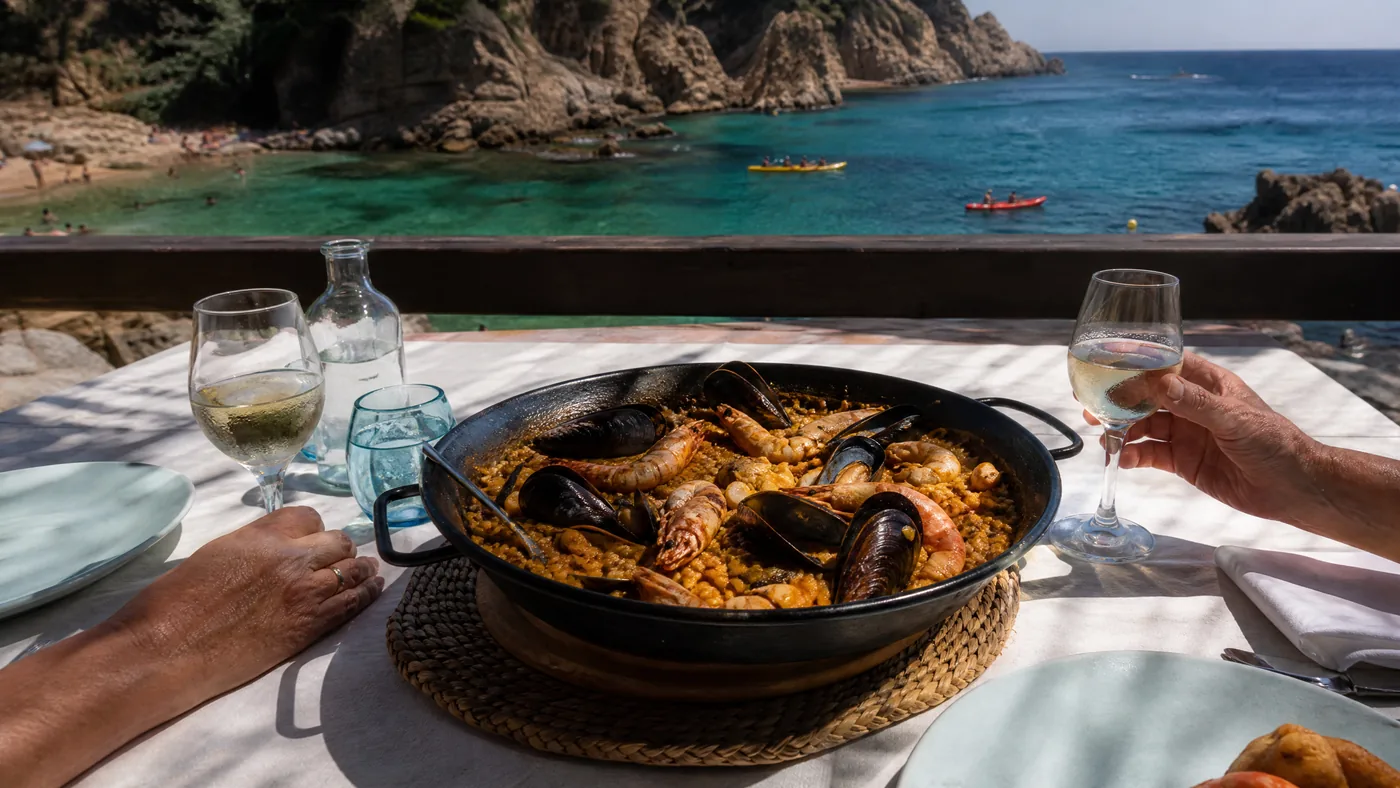
Two hours of small coves and snorkel stops from Platja d'Aro, with gear and a neoprene top included.
Check dates for the Platja d'Aro kayak tourWhich is nicer, Costa Brava or Costa Dorada?
They suit different trips. The Costa Brava, in the province of Girona, is the coast of coves and cliffs; the Costa Dorada, in the south of Catalonia, is the coast of long golden beaches and calm water.
The official descriptions, side by side:
- Costa Brava: Spain.info, the official tourism site of Spain, describes "coves of deep blue sea, beaches of golden sand, natural parks, medieval towns", with coves between cliffs in Tossa de Mar, Torroella de Montgrí, Begur and Calella de Palafrugell.
- Costa Dorada (Costa Daurada): the same site describes "golden sandy beaches and peaceful waters" along 81 km of coast in the south of Catalonia, with Salou, Cambrils and the Roman remains of Tarragona. PortAventura World is there too.
For kayaking, the Costa Brava's broken coastline is the draw: caves, rock passages and coves you can only reach from the sea. That is why every tour on this site is here.
Which kayak tour is nearest each Costa Brava town?
Tossa and Lloret have the Tossa tour; S'Agaró, Sant Feliu and Platja d'Aro have four tours between them; the Palafrugell villages sit between Platja d'Aro and L'Estartit; Begur and Cadaqués are closest to the Medes Islands tours.
Matched by the start point on each listing:
| Town | Known for | Nearest tour | From |
|---|---|---|---|
| Tossa de Mar | The walled Vila Vella | Tossa de Mar kayak tour | $39 |
| Lloret de Mar | The largest resort | Tossa de Mar kayak tour (the next town north) | $39 |
| S'Agaró | Garden village, Sant Pol beach | Sea caves tour from Sant Pol beach | $38 |
| Sant Feliu de Guíxols | Harbor town, Camí de Ronda | Sant Feliu kayak tour; Rats Penats sea kayak | $33 |
| Platja d'Aro | Long beach, small coves | Platja d'Aro kayak tour | $32 |
| Calella, Llafranc, Tamariu | Coves, fishing-village look | Platja d'Aro tour to the south; Medes Islands tour to the north | $32 |
| Begur | Castle, coves, Indian houses | Medes Islands kayak tour | $32 |
| L'Estartit | The Medes Islands | Medes Islands kayak tour; boat trip | $32 |
| Cadaqués | Dalí, Cap de Creus | Medes Islands kayak tour (a long drive south) | $32 |
From-prices are for the basic option on each listing, and every tour cancels free up to 24 hours before. To compare all nine side by side, read our guide to the Costa Brava kayak tours.
Frequently asked questions
What is the prettiest town on the Costa Brava?
Tossa de Mar and Calella de Palafrugell are the names most often given: Tossa for its walled medieval Vila Vella, Calella for its fishing-village look.
What is the best month to visit the Costa Brava?
June and September are our pick: warm sea and fewer people than July and August. Autumn is the rainiest season, per Begur's climate page.
What food is the Costa Brava known for?
Seafood: Palamós prawns, L'Escala anchovies, Cap de Creus lobster, suquet de peix and rice dishes such as arròs a la cassola, per the Costa Brava Girona Tourism Board.
Is the Costa Brava or the Costa Dorada better for kayaking?
The Costa Brava, for its caves, rock passages and coves reached only from the sea. The Costa Dorada is known for long golden beaches and calm water.
Ready to book
Choose your tour
Free cancellation up to 24 hours before on every option. Prices are from-prices in USD and move with the season.
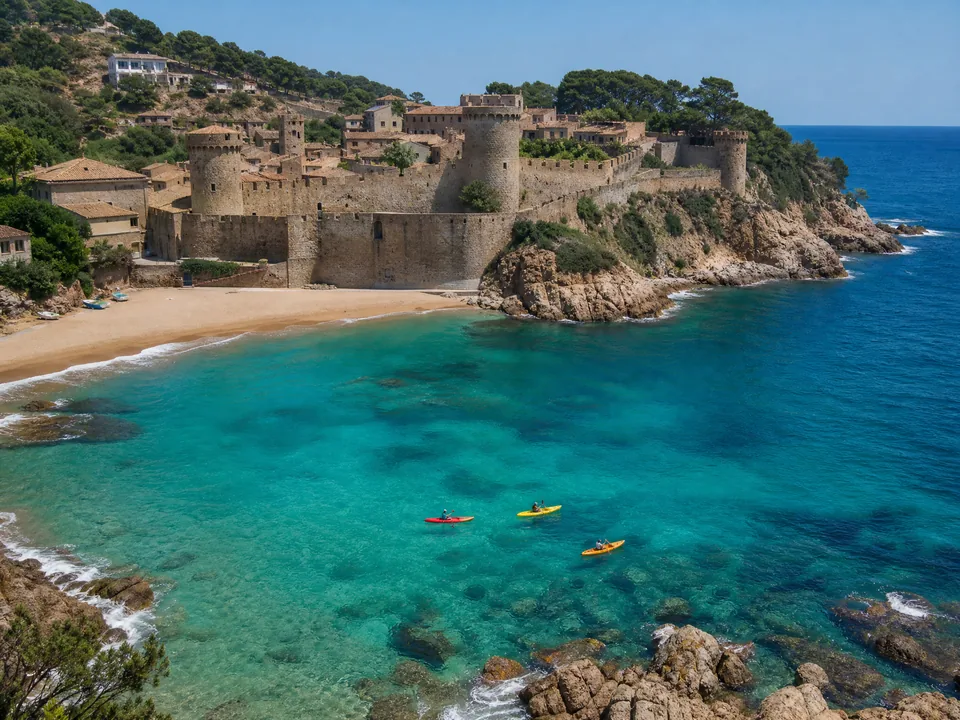
Tossa de Mar Guided Kayaking & Snorkelling
- Guided kayak tour, about 2 hours on the water
- Kayak, paddle and life jacket
- Snorkel mask
Sea Caves Kayaking & Snorkeling Tour
- 2-hour guided kayak tour
- Double kayak, paddle and life jacket
- Snorkel gear
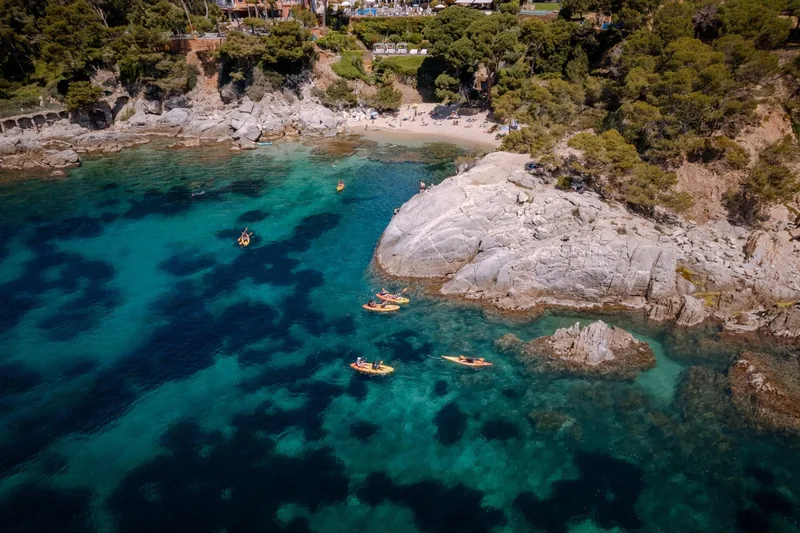
Kayak and Snorkel in Platja d'Aro
Two hours of coves and cliffs, with snorkel gear and a neoprene top