Booking choice: The Sant Feliu kayak tour, from $33 per person. Check dates Tour details
Ask people about kayak safety and you usually get three worries: will I tip over, what if I am not a strong swimmer, and is it fine for the kids. Short answers. You might slip off, and on a sit-on-top that is a laugh, not a crisis. Every tour here needs at least basic swimming. Children can join from age 7 on the S'Agaró and Sant Feliu tours.
Tour details come from each GetYourGuide listing. Everything else is from sources named in plain text: the US Coast Guard, the RNLI (the UK and Ireland lifeboat charity) with British Canoeing, the Government of Catalonia, Begur town council and the 2024 Adult Compendium of Physical Activities. This is general planning help, not medical advice.
The quick answer
The golden rules: wear your life jacket fastened, stay with your kayak and your group, and let the guide and the forecast decide the route. Every kayak tour on this site needs basic swimming skills, and the operators reroute or cancel when wind and waves pick up. New to it? A stable double sit-on-top on the Sant Feliu tour is the easy start.
What are the golden rules of kayaking?
Wear a life jacket, check the weather and paddle within your ability. On a guided tour, add a fourth: stay with the group and do what the guide says.
There is no single official list, but the advice the RNLI and British Canoeing issued together in July 2023 is as close as it gets:
- Wear a buoyancy aid or personal flotation device.
- Carry a way to call for help in an emergency.
- Check the weather before heading out.
- Tell others your plans so they know when you will be back.
- Paddle within your ability.
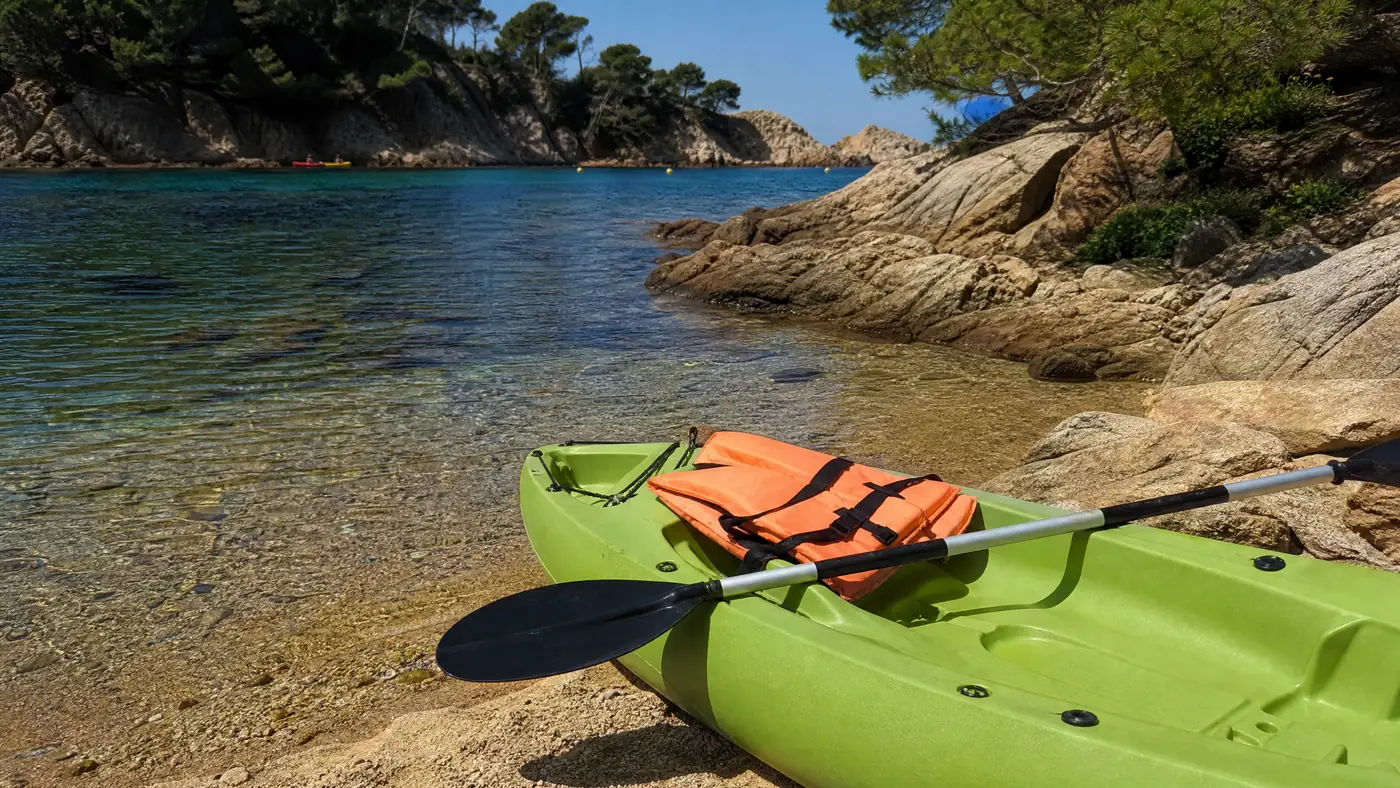
On a guided tour, most of that is done for you. The guide checks the sea, carries the means to call for help and knows where you are. Your part is simple: keep the life jacket fastened, stay close, and say early if you are tired or cold. The listings add their own house rules: no alcohol or drugs, and on the S'Agaró, Sant Feliu and Platja d'Aro tours, no touching marine life.
What is the 50/90 rule in kayaking?
It has no single official definition. In sea kayaking it most often means a rule of thumb for tidal streams; online you will see the phrase used for other things too, so treat it as a phrase, not a rule.
Paddling.com's guide to kayaking in tidal streams calls it "a very good rough rule-of-thumb to tell us how fast the tidal stream is moving at a given time." The idea: split the time between slack water and the strongest flow into thirds, and the current builds to about half its top speed in the first third, about 90% in the second and full speed in the third, then falls away in reverse. It is a planning tool for long trips in tidal waters.
For a two-hour guided paddle on the Costa Brava, the habits that matter are simpler and well sourced: check the forecast, wear the life jacket, and take offshore wind seriously. The RNLI calls offshore winds a "hidden" danger: it can feel sheltered by the beach while further out there are "large waves and stronger winds that can be difficult to paddle against." Its advice is short: "if it is an offshore wind, don't go out." On a guided tour, the guide makes that call for you.
Is kayaking safe for beginners and non-swimmers?
For beginners, yes: the group tours need no experience. For non-swimmers, no: every tour here needs at least basic swimming, and several listings say non-swimmers are turned away without a refund.
The wording on the listings is plain. S'Agaró says basic swimming skills are mandatory, and Sant Feliu says the same. The Rats Penats sea kayak asks for good swimming skills. The private tour says you must be able to swim, and Tossa, Platja d'Aro and the Tossa rental list non-swimmers as not suitable.
For beginners, it is a different story. S'Agaró, Sant Feliu and the Rats Penats trip all say no experience is needed, and the briefing on the beach covers holding the paddle, steering and getting in. Double kayaks help: the stronger paddler sits at the back and steers. Léa joined the Sant Feliu tour in Sep 2026: "Accessible for beginners. I'm happy with the time spent with my family."
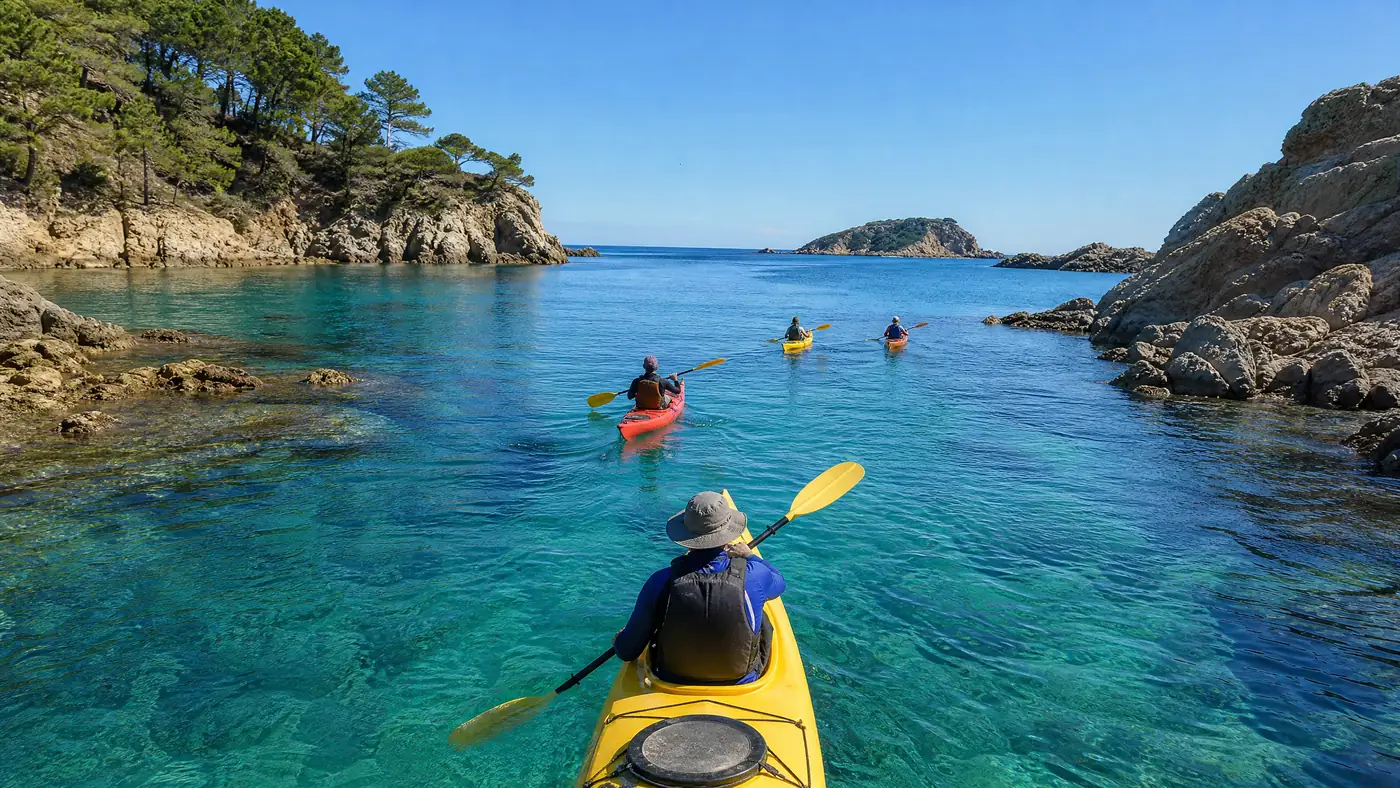
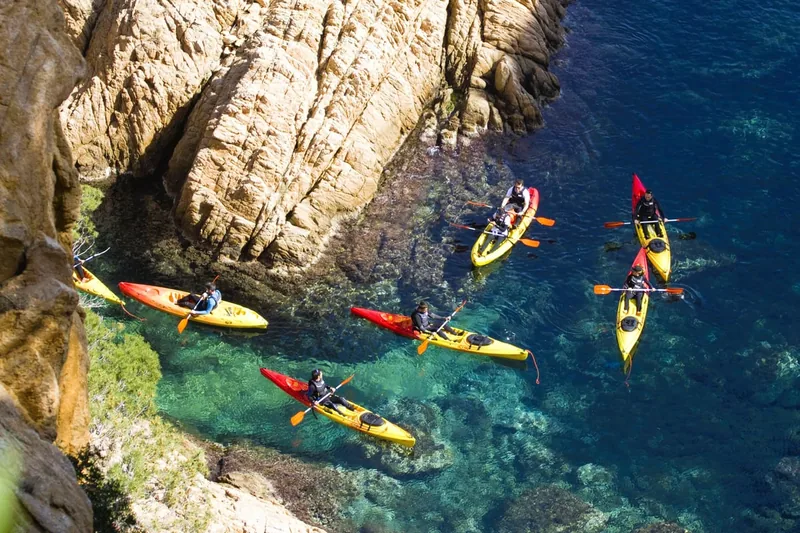
A gentle first paddle: stable double sit-on-tops, a local guide and a snorkel stop in a sheltered cove.
Check dates for the Sant Feliu kayak tourDo kayaks capsize easily, and what do you do if you tip over?
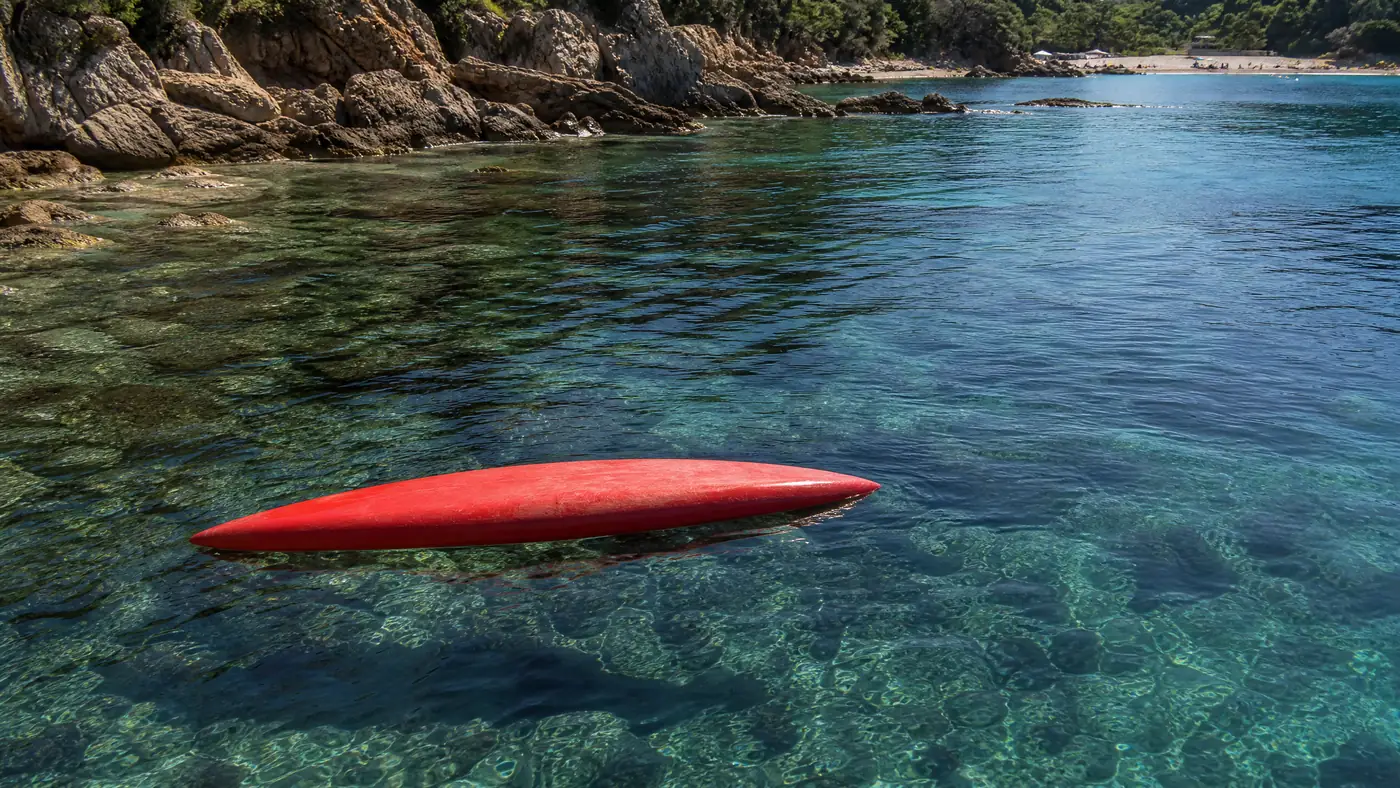
A wide double sit-on-top is hard to tip in calm water, and if you slide off you simply climb back on. In a closed sea kayak you pull the spray skirt loop and slide out; the guide shows you how first.
If you do end up in the water on a sit-on-top:
- Relax and float. The life jacket holds you up.
- Hold on to the kayak and the paddle. The NSW Government's boating advice puts it plainly: "Stay with your capsized vessel", because that makes it easier for rescuers to find you.
- Flip it back if it turned over, then swim to the middle of one side.
- Kick hard, pull your chest across the deck, turn to sit, then swing your legs in. Your partner can lean the other way to balance the boat.
It takes some effort the first time. Jean-Michel, after the Platja d'Aro tour in Aug 2026: "A wonderful first kayaking experience. Laughter guaranteed because it's difficult to get back on the kayak at sea... Athletic but great!" In a closed sea kayak, getting out is the part you learn on the beach: the Rats Penats listing says the briefing covers how to enter, exit and control the kayak.
What is the leading cause of death in kayaking, and the most common injuries?
Drowning. In the US Coast Guard's 2024 Recreational Boating Statistics, 76% of people who died in boating incidents drowned where the cause was known, and most of them were not wearing a life jacket.
The same Coast Guard report gives the detail. Of the drowning victims whose life jacket use was known, 87% were not wearing one. Kayaks accounted for 89 deaths in the US in 2024, 77 of them drownings. That is why the life jacket stays on and fastened on every tour here, even on a flat-calm morning.
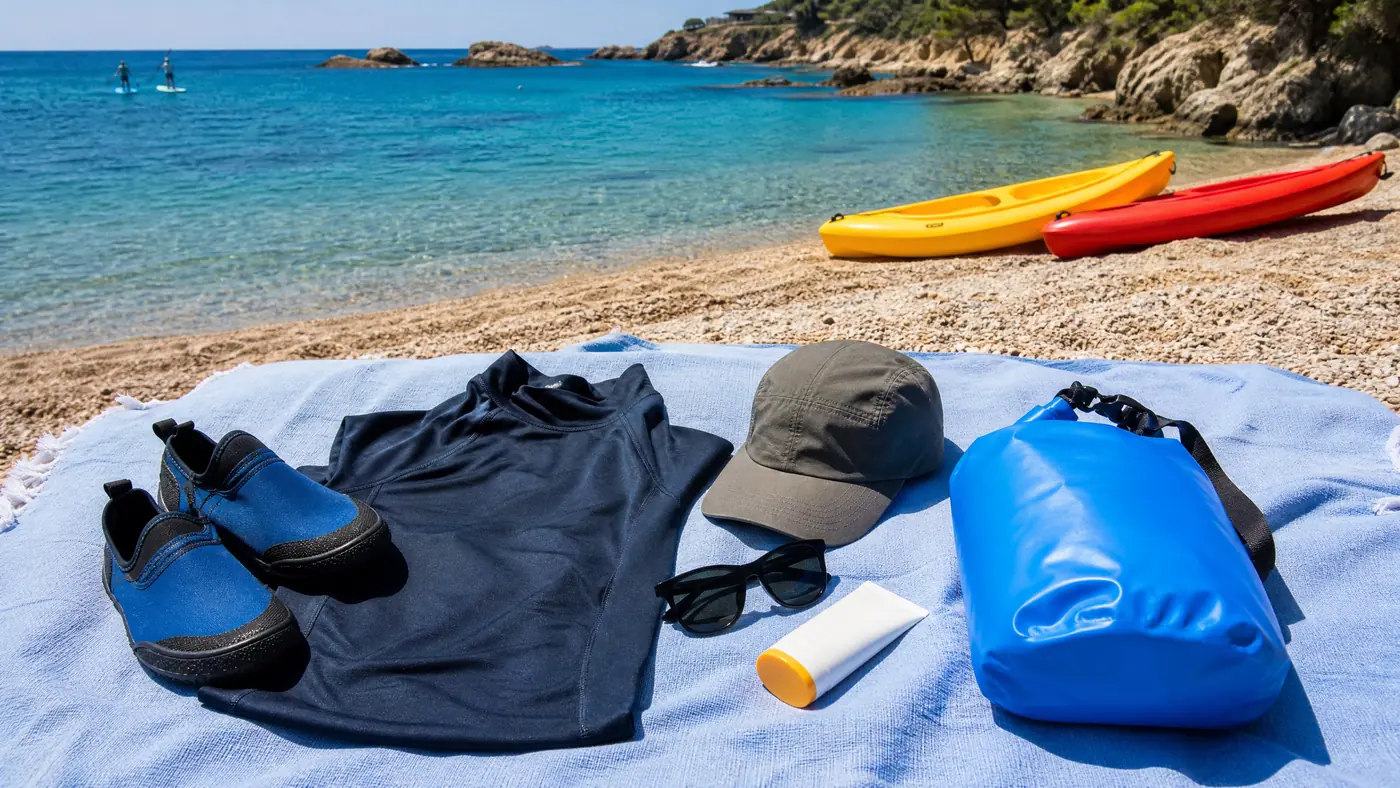
On a two-hour guided tour the everyday risks are smaller: sunburn on bright water, blisters from a tight grip, a scrape on rocks or a sea urchin spine when you climb out in a cove, and tired shoulders. Water shoes, sunscreen and a relaxed grip deal with most of them; see what to wear. The S'Agaró and Sant Feliu operators keep a rescue motorboat on standby, and on the Medes Islands tour a boat stays close by to tow you if needed.
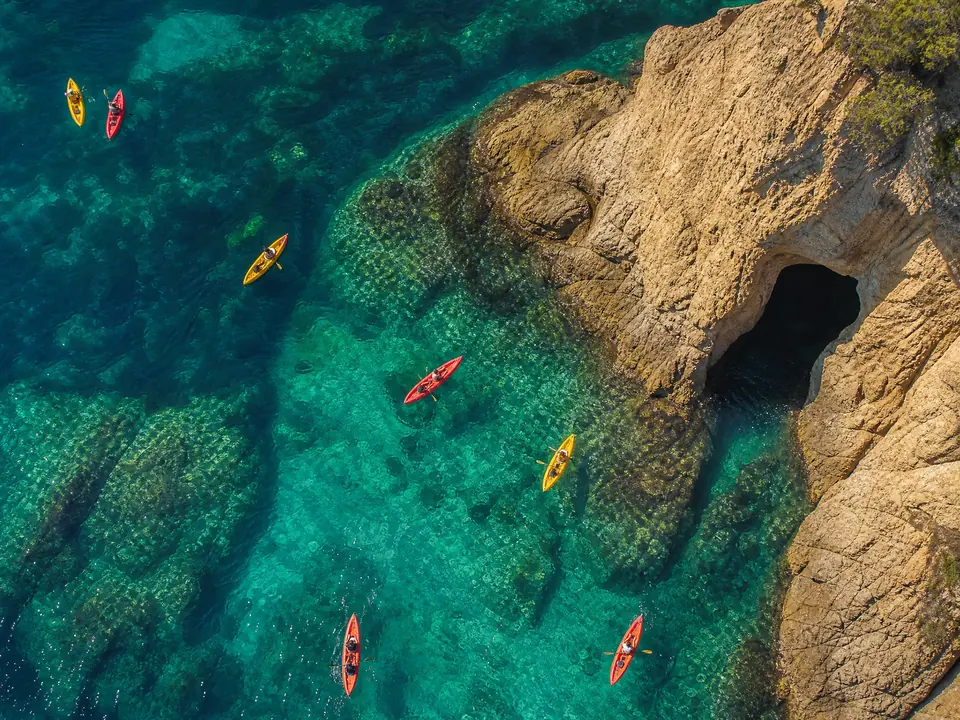
A sheltered bay, groups of 14 at most, a professional instructor and a rescue motorboat if needed, with snorkel gear included.
Explore the sea caves tour from S'Agaró Tour detailsHow do wind and the Tramuntana affect kayaking on the Costa Brava?
A great deal. Wind raises waves and decides which coves are paddleable, so operators pick the route on the day and cancel when it is not safe.
Begur town council's climate page names three winds on this coast: the Tramuntana, a strong north wind, mostly in winter; the Garbí, especially in summer; and the Llevant, common in spring and autumn. Any of them can turn a glassy bay choppy.
The listings show how operators handle it. The Sant Feliu tour may go north or south along the coast depending on the sea. The S'Agaró, Sant Feliu and Rats Penats operators decide at the scheduled start time, based on the real conditions, and the Rats Penats listing says no tour is cancelled in advance on the forecast alone. Tossa notes that the local partner may cancel in unfavorable weather. If yours is called off, you can rebook or cancel free up to 24 hours before. Paddling late in the season? Read our autumn notes.
What are the age, weight and swimming limits on each tour?
From age 7 on the S'Agaró and Sant Feliu tours (with an adult up to 13), from 14 on the Rats Penats sea kayak and from 18 on the private tour. Weight limits run from 220 to 297 lbs.
Each listing's own limits, side by side:
| Tour | Age | Weight limit | Swimming | Also not suitable for |
|---|---|---|---|---|
| Sea caves, S'Agaró | From 7; ages 7 to 13 with an adult | 260 lbs (118 kg) | Basic swimming, mandatory | Pregnancy, mobility impairments |
| Sant Feliu | From 7; ages 7 to 13 with an adult | 264 lbs (120 kg) | Basic swimming, required | Pregnancy |
| Platja d'Aro | No minimum printed | 297 lbs (135 kg) | Swimmers only | Pregnancy, mobility impairments |
| Tossa de Mar | All ages per the description; not over 95 | Not stated | Swimmers only | Heart problems, seasickness, wheelchair users |
| Medes Islands | No minimum printed | Not stated | A swim is part of the route | Mobility impairments, wheelchair users |
| Rats Penats cave | From 14; at least 155 cm (5 ft 1 in) tall | 220 lbs (100 kg) | Good swimming skills | Pregnancy |
| Private tour | 18 to 65 | 243 lbs (110 kg) | Must be able to swim | No kayak experience, low fitness, epilepsy, pregnancy |
| Tossa rental (self-guided) | No minimum printed | Not stated | Swimmers only | Back or heart problems, pregnancy, mobility impairments |
| Medes by boat | From 4, with an adult | Not stated | Not stated | Back problems, pregnancy, wheelchair users |
With children, the Sant Feliu and S'Agaró tours are the natural pick: double kayaks, so a child can sit with a parent, and a guide used to families. Elouisa took her teenagers in Aug 2026: "What a fun experience it was! My teenagers enjoyed it. Vic was very clear, helpful and took everything into account." Too young to paddle? The boat trip takes children from age 4.
Is kayaking good exercise, and why are you sore the next day?
Yes, a moderate workout. The 2024 Adult Compendium of Physical Activities rates kayaking at moderate effort at 5.0 METs, about the same as brisk walking at 3.5 to 3.9 mph (4.8 METs).
A MET is a measure of effort compared with sitting still. In the same Compendium, walking at 2.8 to 3.4 mph rates 3.8, so an hour of steady paddling works a little harder than an ordinary walk. The difference is where the work goes: paddling loads the shoulders, upper back, arms and core, while your legs brace against the footrests.
That is also why people feel it the next day. Most of us rarely use those muscles this way, and two hours of repeated strokes is new work for them. Good technique spreads the load: turn from the waist rather than pulling with the arms alone, keep a light grip, and let your partner set an easy rhythm. Rest days and anything beyond everyday soreness are a question for a doctor, not a kayak guide.
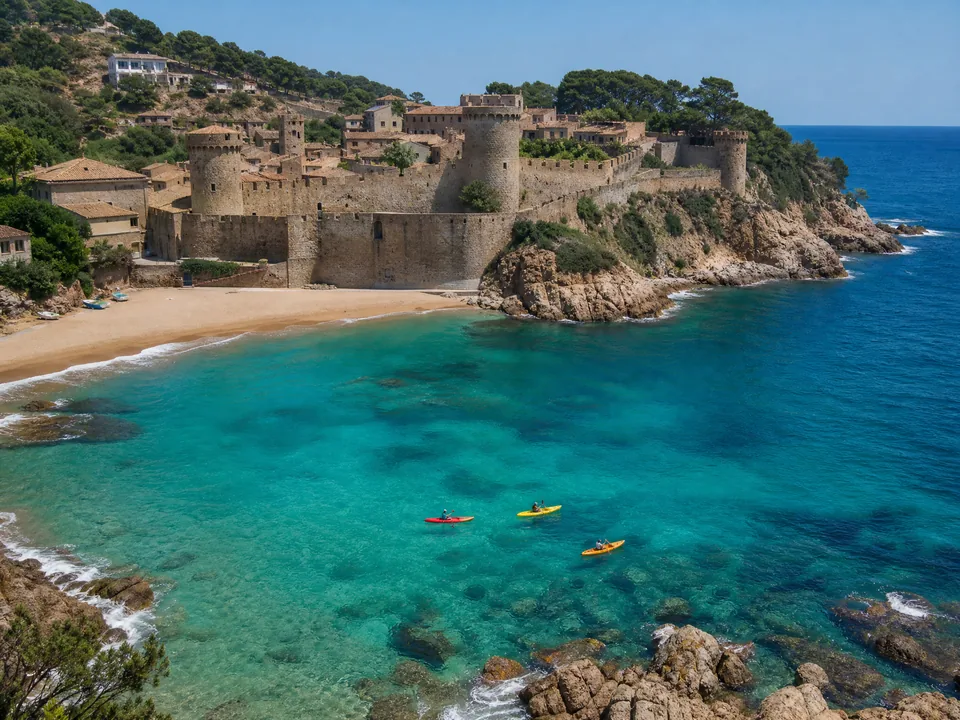
About 2 hours paddling past the rock formations off Tossa, with a guided snorkel stop to rest your arms.
Check dates for the Tossa de Mar kayak tourFrequently asked questions
Can a non-swimmer go on a Costa Brava kayak tour?
No. Every kayak tour on this site needs at least basic swimming skills, and the S'Agaró, Sant Feliu and private tour listings say non-swimmers will not be allowed to join and get no refund.
Is there a minimum age for kayaking on the Costa Brava?
It depends on the tour: 7 on the S'Agaró and Sant Feliu tours (ages 7 to 13 with an adult), 14 on the Rats Penats sea kayak and 18 on the private tour. The Medes Islands boat trip takes children from 4.
Do kayak tours run in strong wind?
Not when it is unsafe. Operators move the route to calmer water or cancel, deciding at the start time on the real conditions. Every tour here cancels free up to 24 hours before.
What number do I call in an emergency at sea in Spain?
112. The Government of Catalonia describes it as the single emergency number throughout Europe, with help 24 hours a day. On a guided tour, the guide raises the alarm.
Ready to book
Choose your tour
Free cancellation up to 24 hours before on every option. Prices are from-prices in USD and move with the season.
Kayak & Snorkeling Tour in Sant Feliu de Guíxols
- 2-hour guided kayak tour
- Double sit-on-top kayak, paddle and life jacket
- Snorkel gear
Sea Caves Kayaking & Snorkeling Tour
- 2-hour guided kayak tour
- Double kayak, paddle and life jacket
- Snorkel gear
Tossa de Mar Guided Kayaking & Snorkelling
- Guided kayak tour, about 2 hours on the water
- Kayak, paddle and life jacket
- Snorkel mask